Sayed Gul Kalash Archaeologist

The first woman from the Kalash community to work in archaeology and anthropology.
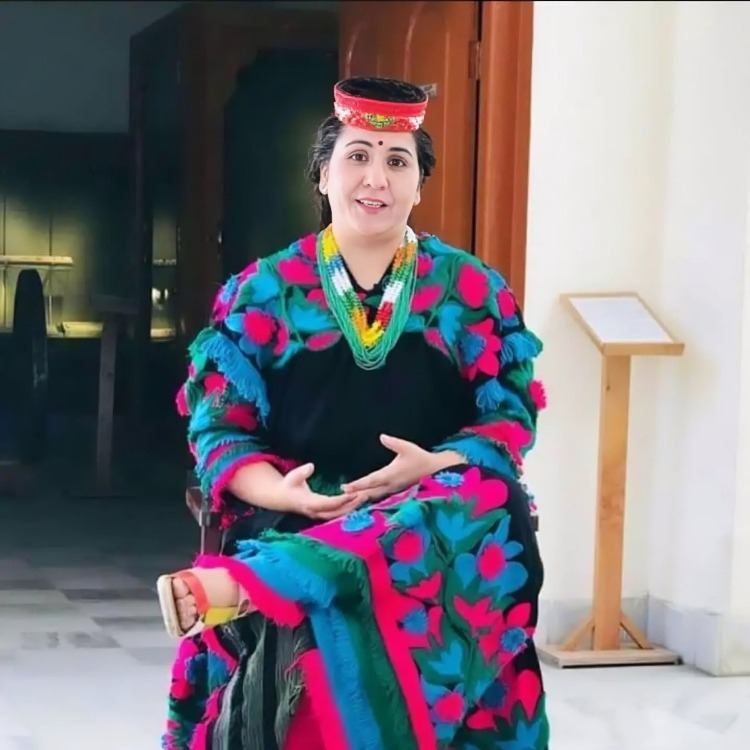
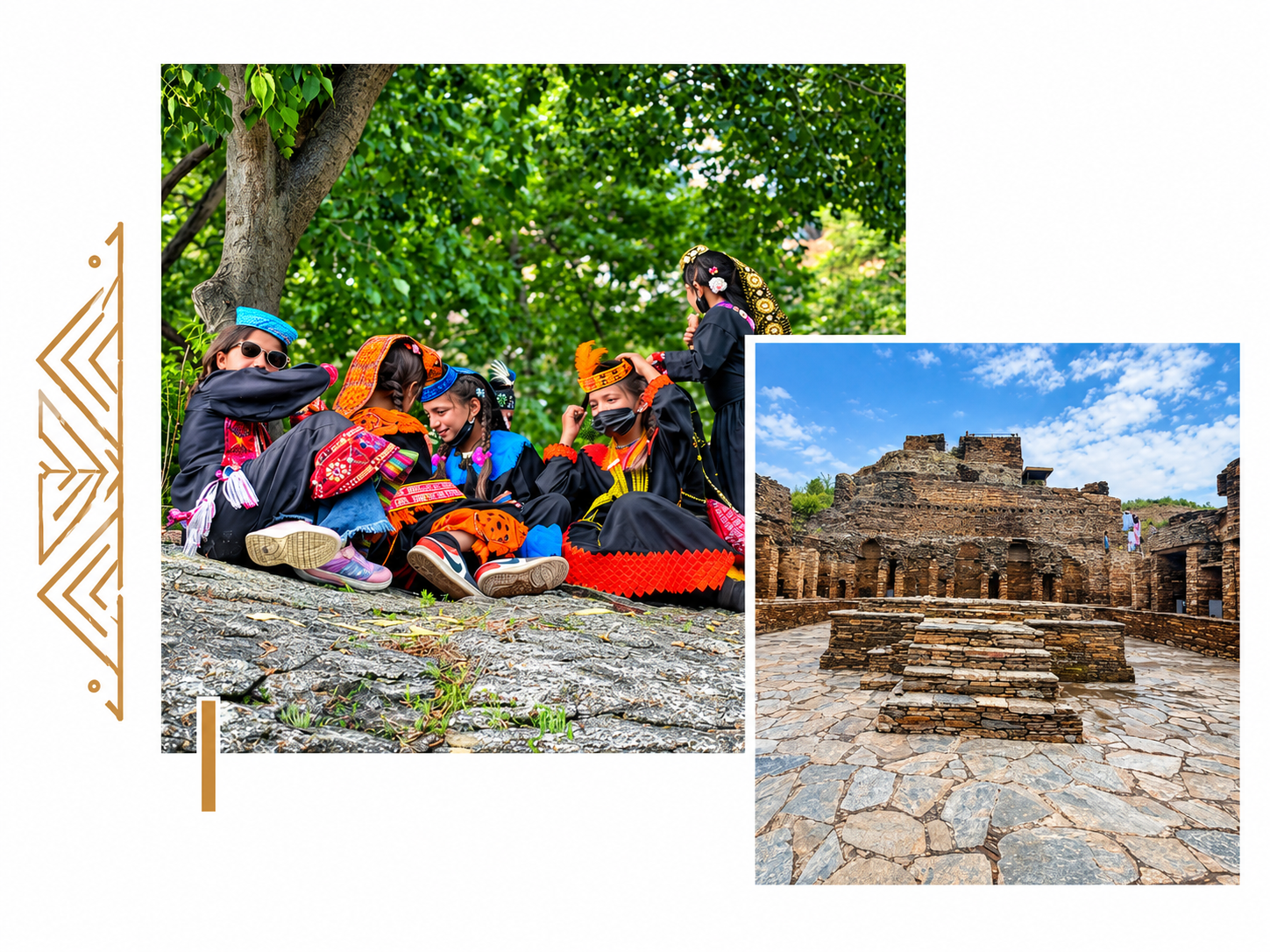
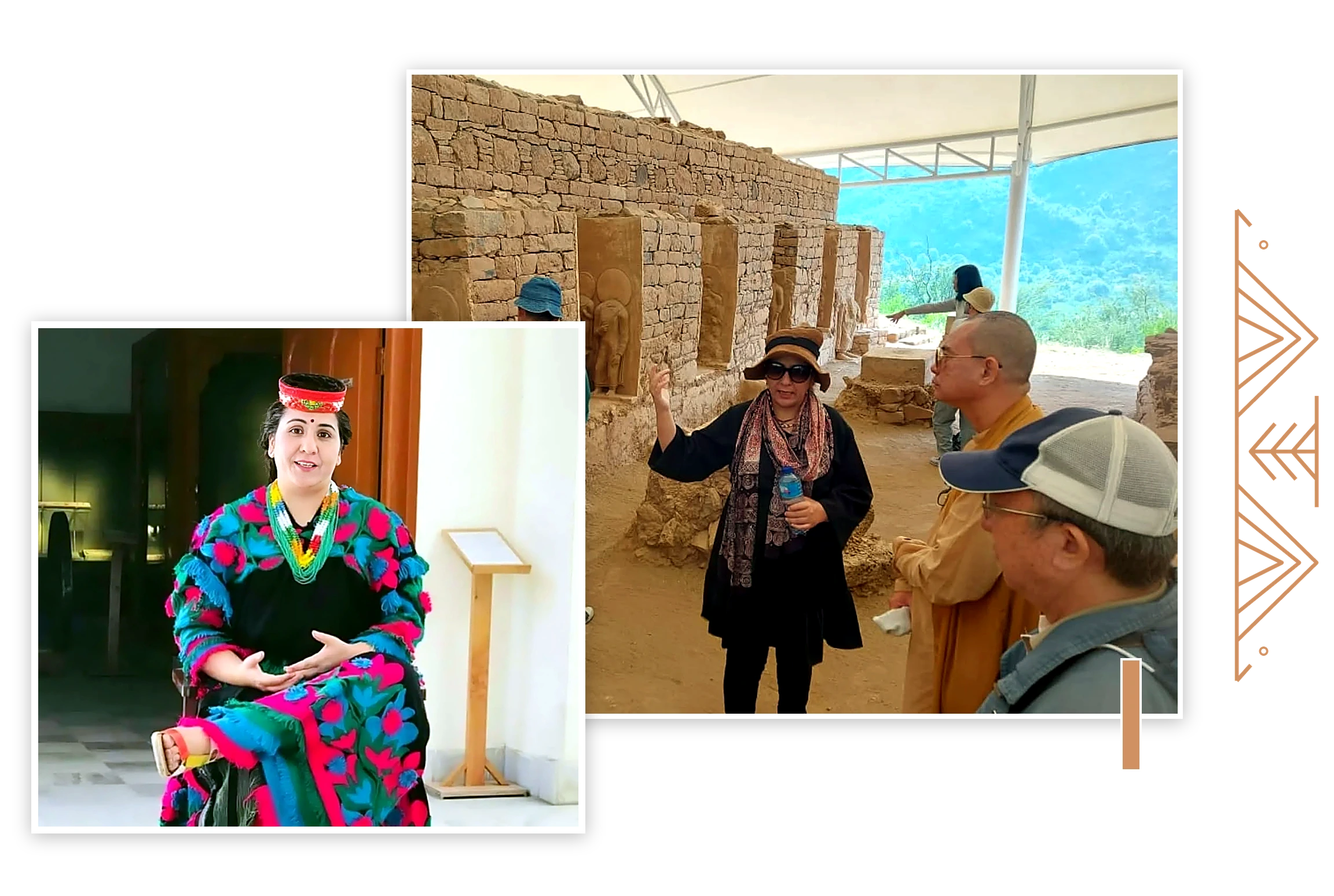
For more than a decade, Sayed Gul Kalash has documented, protected, and shared the history of one of the world’s oldest surviving cultures. Her work spans the excavation sites of Taxila & Lower Chitral (Gankorini o tak), the halls of the museum she helps run, and the classrooms and stages where she speaks about what it takes to keep a culture alive.
Sayed Gul Kalash Archaeologist
Sayed Gul Kalash Story

Sayed Gul Kalash Story

Sayed Gul Kalash grew up in Bumboret, in the Chitral district of northern Pakistan, home to the Kalash people, a community of roughly 4,000 people whose traditions, language, and religion have survived for close to three thousand years. She earned her degree (Post Graduation) in archaeology from Quaid-e-Azam University Islamabad and, while still a student, joined a UNESCO supported fieldwork project with Abdul Wali Khan University, surveying sites across Chitral and Khanpur.

That early fieldwork set the course for everything that followed. As she has put it herself:

“At the onset of my fieldwork, I confronted the grim reality of a culture teetering on the edge of extinction.”

That realization turned into a career built around a single goal, making sure the Kalash story is recorded, understood, and carried forward by the people who live it.

Sayed Gul Kalash Work

The Kalash language and way of life face real threats, from outside influence to the slow pull of assimilation. Sayed Gul Kalash works on both fronts at once, recording what is at risk of being lost while building practical ways for the community to sustain itself, through education, responsible tourism, and platforms that let Kalash voices speak for themselves rather than be spoken about.
She is also known as a role model for Kalasha girls considering education and professional careers that were, until recently, closed to women in her community. Her own path involved real obstacles, including family resistance and a punishing trek through mountain terrain just to reach school. She has been direct about the cost:

“I love the challenge. They can say what they want, but I love risks.”
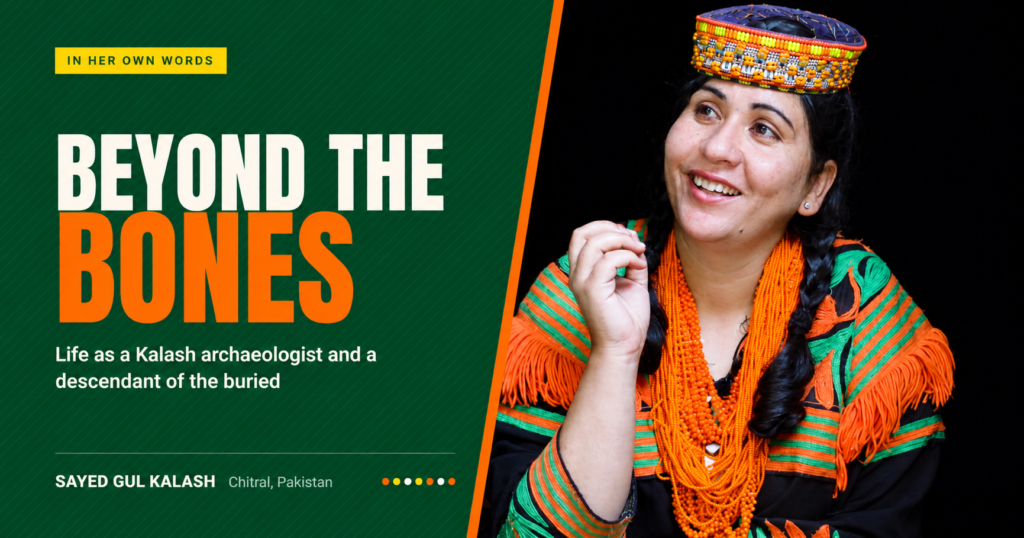
Sayed Gul Kalash – Daughter of Kalash

In 2013, Sayed Gul Kalash was named a National Geographic Emerging Explorer for her efforts to preserve endangered Kalash culture and language, one of a small number of researchers worldwide to receive that recognition in a given year. Her work has since been covered by regional and international press and featured by organizations supporting indigenous heritage and human rights, including the Cultures of Resistance Fund.

She has spoken publicly on cultural preservation, language revitalization, and sustainable tourism, sharing what firsthand fieldwork in a community under pressure actually looks like, not as an outside expert, but as someone documenting her own culture from within it.
Sayed Gul Kalash
Archaeologist

Questions about my work

Here are some common questions about my research, fieldwork, and collaborations.

Sayed Gul Kalash is a Pakistani archaeologist, cultural activist, and filmmaker from the Kalash valleys of Chitral, Khyber Pakhtunkhwa. She is the first and only Kalash woman trained as a scientist and archaeologist, and in 2013 was named a National Geographic Emerging Explorer. She holds an MA in Cultural Heritage and Tourism Management from Hazara University Mansehra and an MPhil in South Asian Studies from Quaid-i-Azam University, Islamabad. She has dedicated her career to preserving the language, traditions, religion, and heritage of the Kalash people.

The Kalash valleys are three remote valleys called Bumburet (Momorate), Rumbur (Rukhmo), and Birir (Biriu), located in the Hindu Kush mountain range in Chitral district, Khyber Pakhtunkhwa, Pakistan. They sit near the Afghan border and are accessible from Chitral town. The Kalash community, numbering around 4,000 to 7,000 people, is one of the oldest living indigenous cultures in South Asia with a distinct language, religion, festivals, and traditions.

The Kalash follow one of the last living polytheistic traditions in South Asia. They believe in a creator God called Dezao, also referred to as Khodai. Alongside Dezao, the Kalash recognize sacred spirits called Dewalok who are responsible for different aspects of daily life. Their spiritual world is organized around the concept of Onjesta, meaning pure or sacred, and Pragata, meaning impure or profane. Kalash religious practice includes prayers, animal sacrifices, purification rituals, and festivals tied to the agricultural calendar.

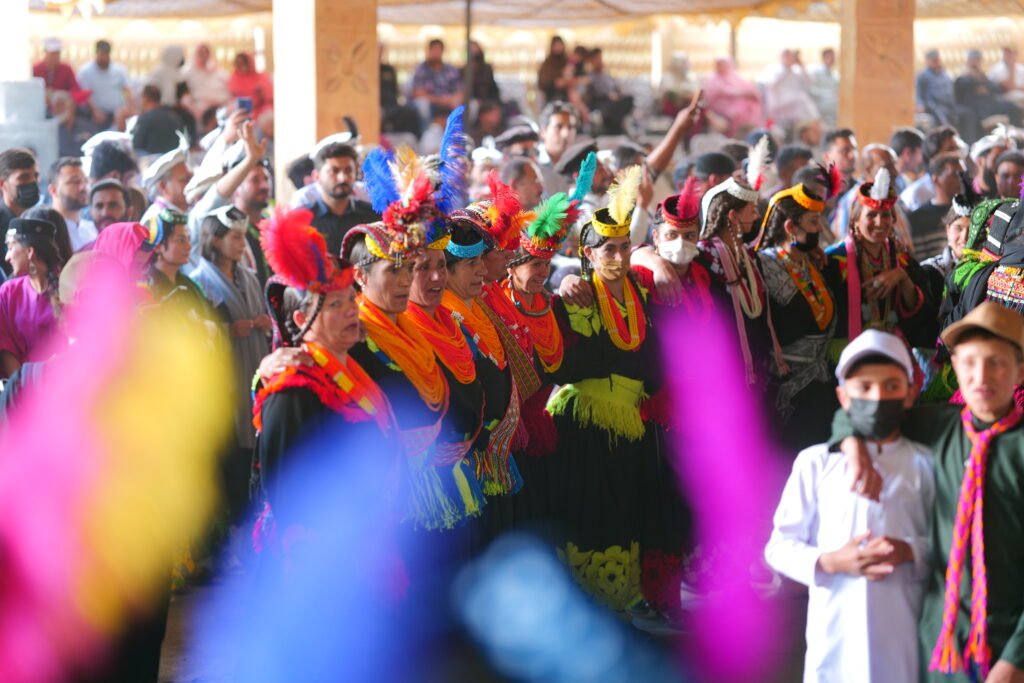
The Kalash celebrate four major seasonal festivals. Chilimjusht, also called Joshi, is the spring festival celebrated in May marking the new season and the blessing of herds and crops. Uchau is the summer harvest festival celebrated in August. Phoo is the autumn festival in October, celebrated only in the Birir valley. Chaumos, also called Chitirmas, is the most important Kalash festival, celebrated from December 8 to 21. Each festival involves singing, dancing, sacrifices, and community gathering.

The Gandhara Grave Culture is the name given by archaeologists to a set of prehistoric burial sites found across ancient Gandhara, covering most of present-day Khyber Pakhtunkhwa. Archaeological excavations in Chitral, the region where the Kalash live, have revealed burial sites with grave goods including ceramics, weapons, jewellery, and agricultural tools that closely match Kalash burial traditions still practiced today. Sayed Gul Kalash researched this connection for her MA thesis at Hazara University, concluding that the Kalash have closer cultural ties to the ancient Aryans than to the Greeks, despite the popular Alexander the Great theory.

She served as a Field Officer at the Directorate of Archaeology and Museums in Khyber Pakhtunkhwa, with fieldwork at the UNESCO World Heritage Site of Jaulian Monastery in Taxila. She worked with UNESCO as a social mobilizer on a culture-mapping project in Mardan. She completed Cultural Heritage Management training at the Smithsonian Institution in Washington D.C. and also served as the manager of Chitral Museum, which holds over 1,300 artifacts from the Kalash valleys and surrounding region.

The Kalasha language belongs to the ancient Dardic branch of the Indo-European language family. It is related to Khowar, the language spoken in Chitral, and has similarities with both Indo-Aryan and Iranian language groups. Kalasha has no widely agreed-upon written script and exists primarily as a spoken language passed through conversation, songs, and oral tradition. With only a few thousand speakers remaining and younger generations shifting to Khowar and Urdu for education and work, the language is considered endangered.

The Bashali is a house set apart from the main village where Kalash women go during menstruation and childbirth. It is an important part of the Kalash spiritual system, connected to the Onjesta and Pragata framework of purity and sacredness. It is guarded by Dejalik, a goddess who specifically protects women and children. Inside the Bashali, older women pass down ancient songs and cultural knowledge to younger generations, making it one of the key spaces where Kalash oral tradition is preserved.

She produced and directed a short documentary called Kalasha the Core of Culture. The documentary explores the life, traditions, and cultural identity of the Kalash people. It reflects her belief that the story of the Kalash community deserves to be told by the Kalash people themselves, not interpreted or filtered through outside perspectives.

People can support Kalash heritage by practicing responsible tourism when visiting the Kalash valleys, which means asking permission before photographing people or ceremonies, supporting local guides and artisans directly, and treating festivals as sacred events rather than tourist attractions. Following and amplifying the work of Kalash researchers and activists like Sayed Gul Kalash on social media also helps bring global attention to the community. Academic institutions and NGOs working in indigenous heritage preservation, linguistics, or cultural documentation can partner with local Kalash researchers for fieldwork and documentation pro

Get in Touch

Sayed Gul Kalash welcomes inquiries from researchers, journalists, documentary teams, event organizers, and anyone working on indigenous heritage or cultural preservation.
For speaking engagements, interviews, research collaboration, or press inquiries, reach out directly: