
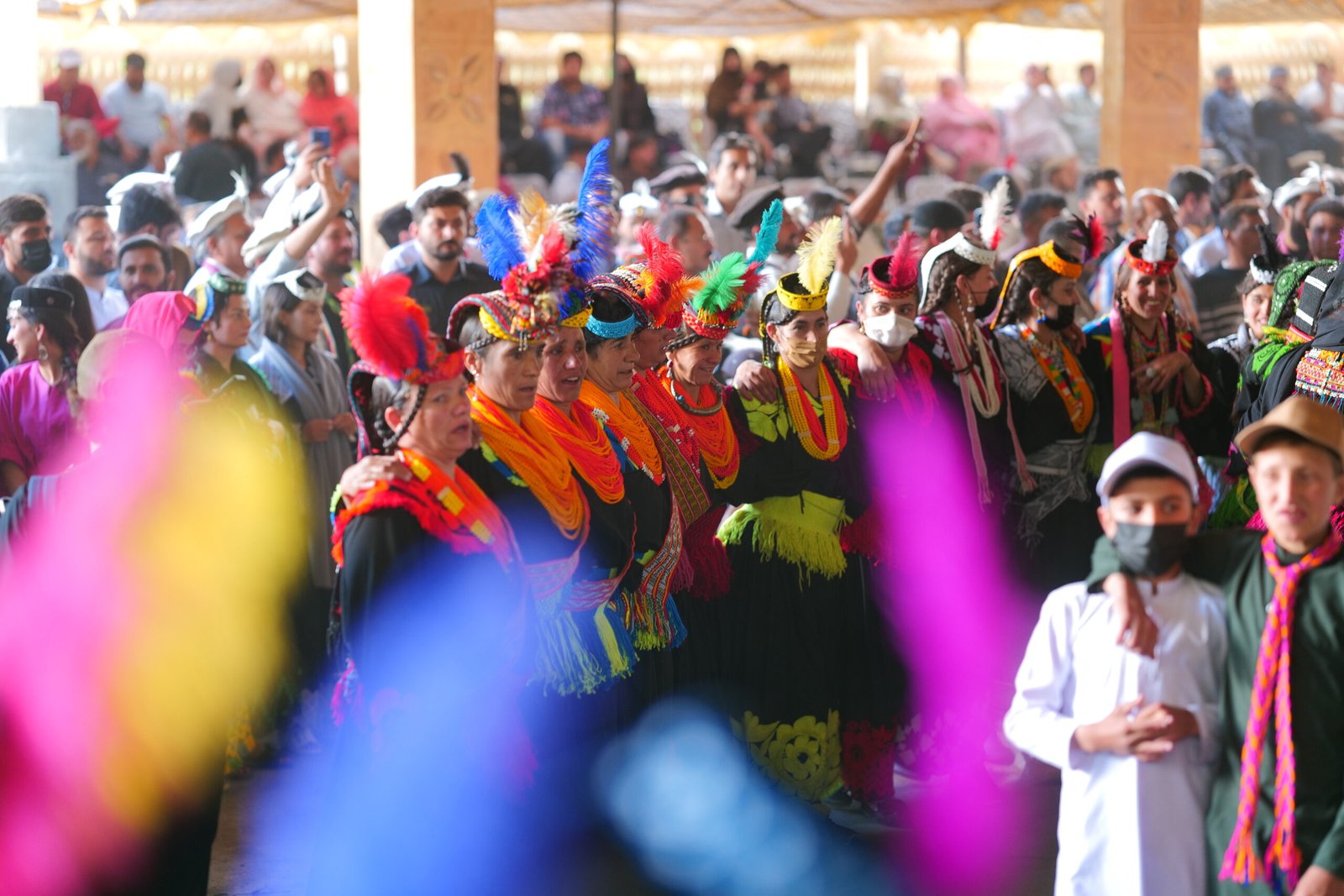
Phoo Festival: The Sacred Grape Harvest of the Kalash in Birir Valley
The Kalash people of Pakistan’s Chitral district celebrate four major festivals each year, each tied to a season and a gift from the earth. Of these four, the Phoo Festival is the most intimate. It belongs only to Birir Valley, the smallest and most remote of the three Kalash valleys. Every October, when the fruit trees have given their last harvest and the grapes are ready, Birir Valley comes alive with a celebration that is as spiritual as it is communal.
What Is the Phoo Festival?
Phoo Festival takes place each year in mid-October in Birir Valley. It marks two things happening at once: the end of the fruit harvest season and the completion of grape wine production for the year.
For the Kalash, these are not simply agricultural milestones. They are sacred moments. The entire community gathers to give thanks, perform purification rituals, and honour the traditions their ancestors carried down through the centuries.
What makes Phoo different from the other three major Kalash festivals is that it is exclusively celebrated in Birir Valley. Visitors who want to witness this particular gathering must come to Birir. The other two valleys, Bumburet and Rumbur, do not observe Phoo in the same way.
The Sacred Role of Grape Wine
At the heart of Phoo Festival is grape wine, and it holds a meaning here that goes far beyond drink. In Kalash religious life, wine is considered sacred. It is used in purification rites: the Kalash sprinkle it on themselves, on sacred altars, and on holy sites as an act of spiritual cleansing.
This is not a tradition created recently. It stretches back to the very roots of Kalash belief and runs through nearly every major ritual observance in Kalash culture, particularly during Chaumos, the winter festival in December, where wine and grapes appear in almost every ceremony.
The Story Behind the Tradition: Nagha Dehar
Every living tradition has a story at its origin, and the Kalash explain the sacred role of wine through the story of Nagha Dehar.
Dehar in the Kalash language means shaman. Nagha Dehar was a shaman of great power. According to Kalash oral tradition, there was once a contest among shamans to demonstrate their supernatural abilities. Nagha Dehar declared that he could break a mountain with his head alone. He struck the mountain, and then he vanished.
He was later found in Birir Valley. The stream connected to the place of his reappearance is said to still flow there today. When he came back to the community, he was carrying a vine branch with grapes. He addressed his people directly:
My dear community, I have brought this directly from heaven. From this time onward, the Kalash community will use it to purify themselves and their sacred altars.
That is how, according to the Kalash, grapes and wine entered their sacred life. Not as a drink, but as a gift carried back from somewhere beyond the mountain.
The Connection to Chaumos
Phoo Festival in October and Chaumos in December are connected in a clear line. The grapes harvested and the wine produced during Phoo season become the sacred materials used in Chaumos rituals two months later. In this way, Phoo is not only a celebration in itself but also a preparation for the most important festival in the Kalash year.
Understanding Phoo gives anyone who witnesses Chaumos a deeper sense of what the wine being poured and sprinkled actually represents, where it came from, and what it means to the people who are using it.
Why Phoo Matters Beyond the Valley?
Festivals like Phoo are not simply local customs. They are living records of a community’s relationship with nature, with the divine, and with each other. The Kalash have maintained these traditions for centuries without writing them down in books. They are carried in oral stories, in rituals performed season after season, and in the hands of women who press grapes the same way their grandmothers did.
As a Kalash Cultural Ambassador and archaeologist, I have seen firsthand how quickly these traditions can fade when the world outside does not know they exist. Documenting Phoo Festival, sharing its story, and bringing it to a wider audience is not just about cultural pride. It is about making sure the story of Nagha Dehar and the sacred vine is not lost.
If you ever have the opportunity to visit Birir Valley in October, go. There is nothing quite like it.